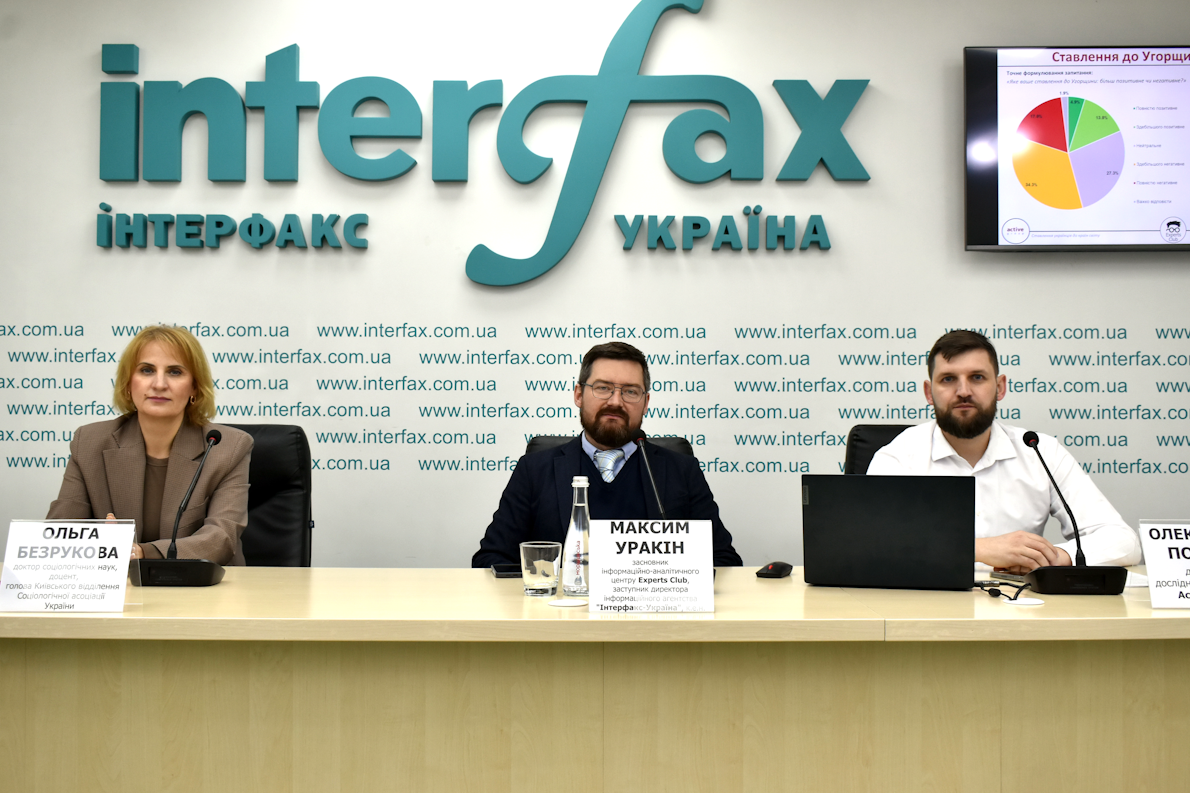
The results of a sociological survey conducted in March 2026 by the Active Group company together with the Experts Club information and analytical center with the help of the SunFlower Sociology online panel make it possible to assess how Ukrainians see the priority directions for the development of the state's trade and economic relations. The study covered 800 respondents and was representative in terms of age, gender and region of Ukraine.
The highest level of support remains the European direction. 81.1% of respondents believe that Ukraine should first of all develop economic relations with the countries of the European Union and Great Britain. Compared to August 2025, this indicator has slightly decreased (from 82.8%), but in general it remains stably high. This indicates the unchanging basic public consensus regarding European integration as a key economic reference point.
The second place is occupied by the USA - 59.2% of respondents. The indicator almost did not change compared to the previous period (58.8%), which indicates a stable perception of the American direction as one of the main ones for the development of foreign trade, investment and technological partnership.
The most dynamic changes are observed in the countries of Southeast Asia. The share of those who consider the development of relations with this region a priority increased from 26.7% to 49.0%. Such an increase is the largest among all answer options and indicates a significant expansion of the economic horizon in public perception. Ukrainians are increasingly considering Japan, South Korea, and other countries in the region as potential sources of technology, investment, and industrial development.
The rate of China has also increased significantly — from 21.0% to 35.4%. This demonstrates the pragmatic approach of the respondents: despite the complexity of the political context, China is perceived as an important economic partner given the scale of its market, production potential and role in global supply chains.
Similar dynamics can be traced in relation to the countries of the Arab and Muslim world — their support increased from 19.7% to 29.8%. The indicator for African and South American countries almost doubled — from 9.7% to 19.6%. This indicates the gradual formation of a demand for wider geographical diversification of foreign economic relations. Ukrainian society increasingly recognizes the potential of new markets, especially in the context of exports and the search for alternative directions of economic cooperation.
"Ukrainians do not perceive the world in black and white. Where they see specific actions and have more information, the assessments are quite clear. And where there are fewer signals or the situation looks contradictory, neutral answers, doubt and distance are growing," noted Oleksandr Pozniy, director of the research company Active Group.
At the same time, the hierarchy of priorities remains clear. The European Union and Great Britain form the core of foreign economic orientation, followed by the USA, and then Asian countries and other regions of the world. This structure of answers shows that Ukrainians support a combination of strategic integration with the West and gradual expansion of cooperation with other economic centers.
From an analytical point of view, this means that society does not consider these directions as mutually exclusive. On the contrary, there is a demand for a multi-vector economic policy, in which the Western vector remains basic, but is supplemented by active work in new markets. This approach corresponds to the logic of increasing economic stability through the diversification of foreign trade.
The indicators of the options "difficult to answer" (9.1%) and "with none" (2.6%) remain relatively low, although they show some growth. This may indicate the presence of a part of respondents who either do not have a clear position regarding the geography of economic priorities, or evaluate the prospects of foreign trade more cautiously.
"The modern international economy is not only foreign trade figures, but also trust, political closeness and a sense of partnership. That is why Ukrainians evaluate other states not only by the scale of their influence, but also by the extent to which they are actually present in the Ukrainian agenda. In the issue of peace, this logic manifests itself especially acutely," noted the founder of the Experts Club information and analytical center Maksym Urakin.
In conclusion, the results of the public opinion survey demonstrate that Ukrainian society maintains a clear orientation towards Western markets, but at the same time increasingly supports the expansion of cooperation with other regions of the world. The key trend is not a change in priorities, but in their addition — due to the growing interest in new economic partners alongside the traditional ones.