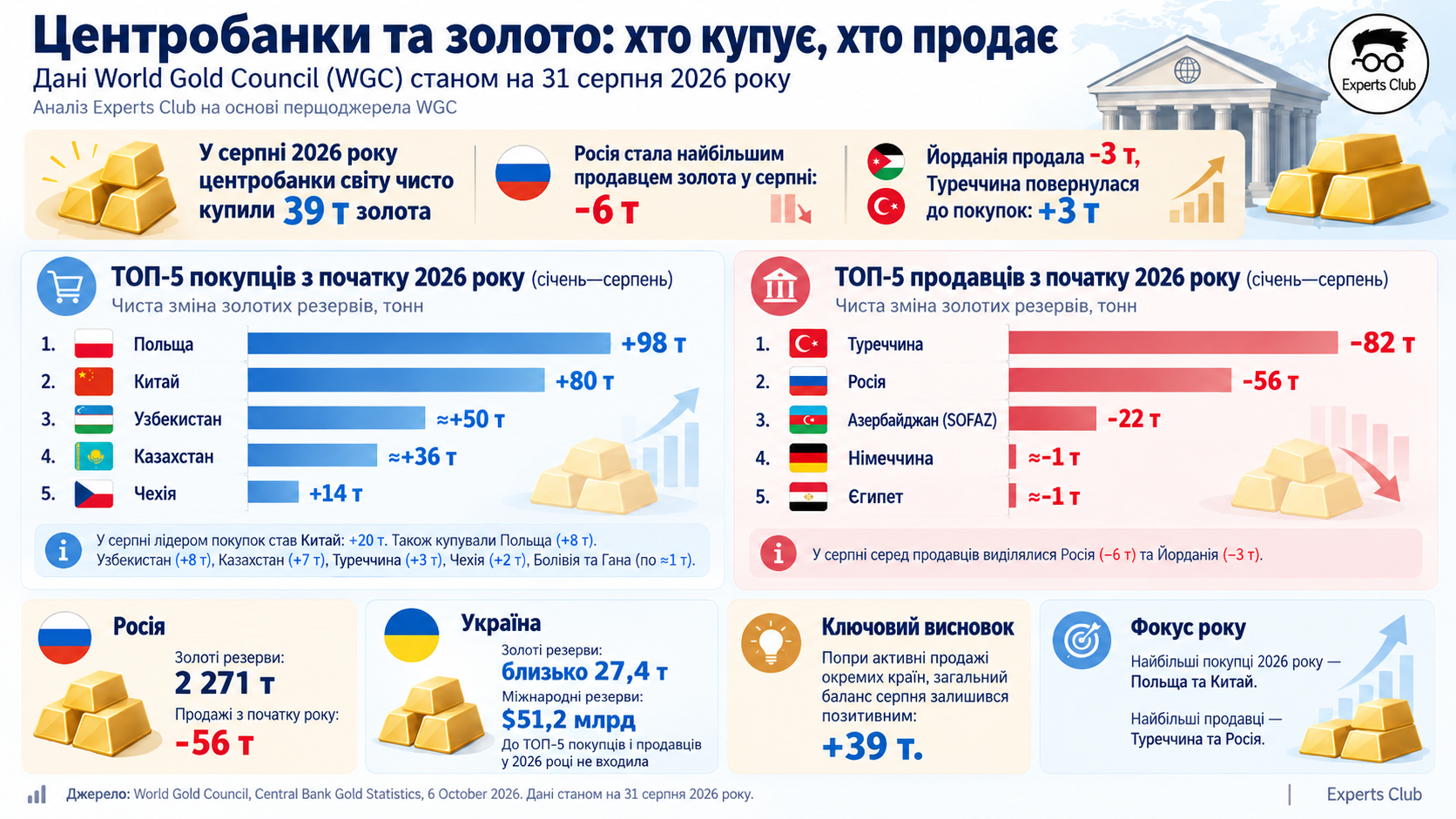
The Central Bank of Russia became the largest seller of gold among the world's central banks in August 2026, reducing official gold reserves by approximately 6.2 tons, according to data from the World Gold Council (WGC).
Among notable sellers of gold in August, the WGC highlights:
Russia - about 6.2 tons
Jordan - about 3.1 tons
Russia continued to reduce gold reserves after selling about 6 tons in July. In general, for January-August 2026, Russian official gold reserves decreased by approximately 56 tons.
The volume of gold sales after August in of Russian reserves was about 2,271 tons.
Jordan sold about 3.1 tons of gold in August. However, unlike Russia, according to the results of eight months, the country remains a net buyer: since the beginning of 2026, its gold reserves have increased by approximately 2 tons - to 75 tons. Gold accounts for about 37% of Jordan's international reserves.
At the same time, Turkey remains the largest seller of gold according to the results of January-August, despite the fact that it switched to purchases in August.
According to the WGC, Turkey has reduced its gold reserves by approximately 82 tons since the beginning of the year. The main sales fell on the first quarter of 2026. In August, the trend changed - the Turkish central bank purchased about 2.9 tons of gold.
Russia ranks second among the largest sellers since the beginning of the year with an indicator of about 56 tons.
Thus, August showed a significant advantage of buyers over sellers: global central banks collectively purchased 39 tons of gold in net terms against 23 tons in July.
The World Gold Council notes that the data covers officially declared changes in reserves by central banks and other official institutions and may differ from a broader estimate of global central bank demand, which takes into account undeclared purchases.
Source: World Gold Council, Central Bank Gold Statistics.