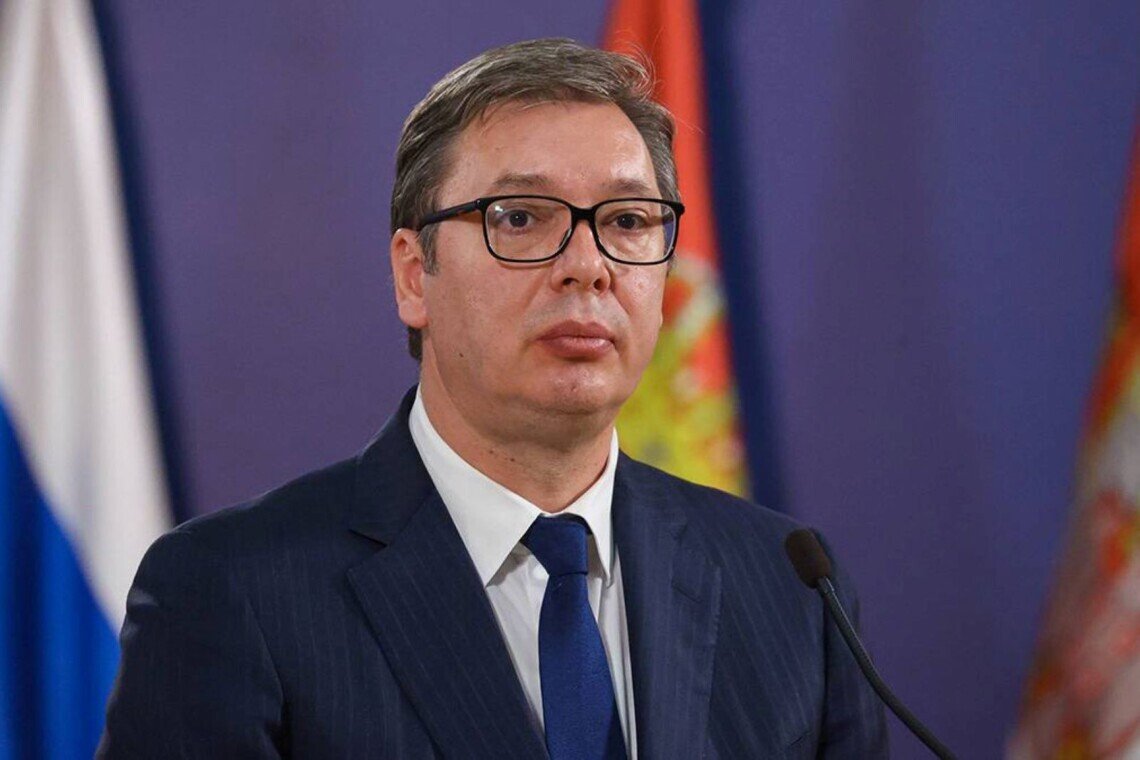
The Serbian business publication Parametar prepared an interesting analysis of the parliamentary elections in of Serbia President Oleksandr Vuchich has scheduled early parliamentary elections for October 25. Serbia is to be allocated 250 parliamentary mandates, but in essence the campaign turns into a choice between preserving the current model of power and attempting a political reset.
The main favorite is the "Aleksandr Vucic - United Serbia" block around the SNS. Vucic himself is running as a candidate for the post of prime minister. His campaign, according to Serbian media Parametar, will be built around stability, infrastructure construction, investments, economic growth and the thesis that the country cannot return to a period of political instability.
The main competitor for the first time is not a traditional party, but the Student List, which arose from protests after the tragedy in Novi Sad. Its main topics are corruption, the responsibility of the authorities, the independence of institutions and the entry of new people into politics. The slogans of the movement are as simple as possible: "Students are winning" and "Either Serbia or the mafia."
Part of the opposition has already decided to support the students, but there will not be a single anti-government list. The pro-European "European Serbia", the "People's Serbia" block, Ivica Dacic's socialists and several national conservative and sovereignist associations are running separately.
The separate campaign of the two main power centers is also divided by fundamentally different emotional agendas. According to sociologist and co-founder of Active Group Oleksandr Poznia, Vučić will build his campaign primarily around the thesis of stability — reminding voters of economic growth, large-scale infrastructure projects, investment inflows, and the general change in Serbia's level of development in recent years. Such a strategy should convince the voter that the change of government carries the risk of losing the results achieved by the country. The student list, on the contrary, will appeal to the accumulated demand for the fight against corruption and the renewal of the political system, opposing the current elite with new people not connected to traditional parties. Thus, the elections may in many ways turn into a clash of two basic formulas — "stability and economic results" versus "change of power and cleansing of institutions."
That is why the key question will be what is more important for the voter: the preservation of economic and political stability or the demand for a profound change in the system.
National minority parties will traditionally be a separate segment. A special electoral regime applies to minorities: they do not need to overcome the general 3 percent barrier, and during the distribution of mandates, their result is adjusted by a special coefficient. At the beginning of the campaign, the Union of Voivodeship Hungarians (SVM), Bosnian parties SPP and SDA, representatives of the Albanian and Roma population and a number of small regional associations are expected to participate. Before the end of registration, their composition may still change.
Sociological data are still contradictory. Faktor Plus gives SNS about 47%, students - about 32%. An earlier CRTA survey showed the opposite picture - about 45% of students against 36% of SNS.
On international betting platforms, Vučić still looks like a clear favorite, but there is still a month and a half to vote, and the final list of race participants is just being formed.
Read more at Parametar.rs.