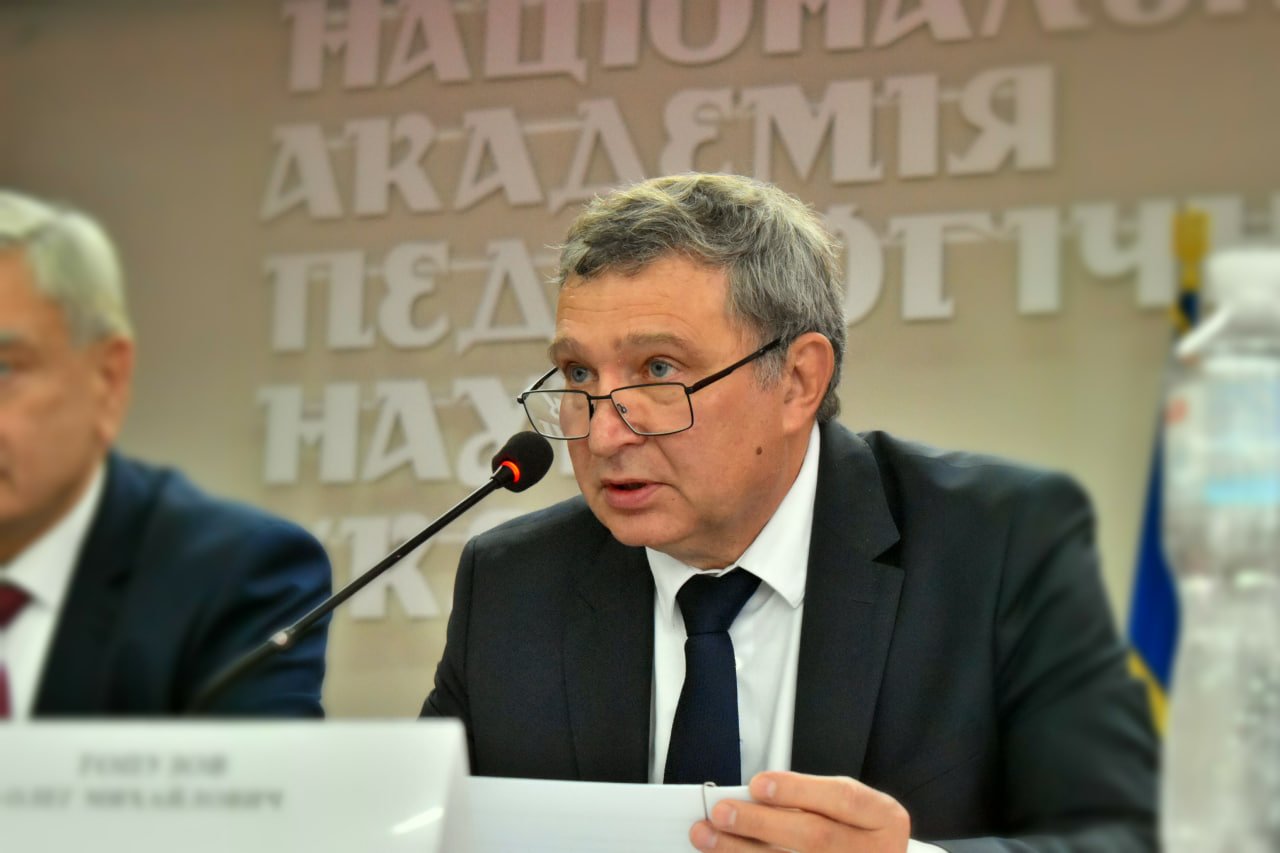
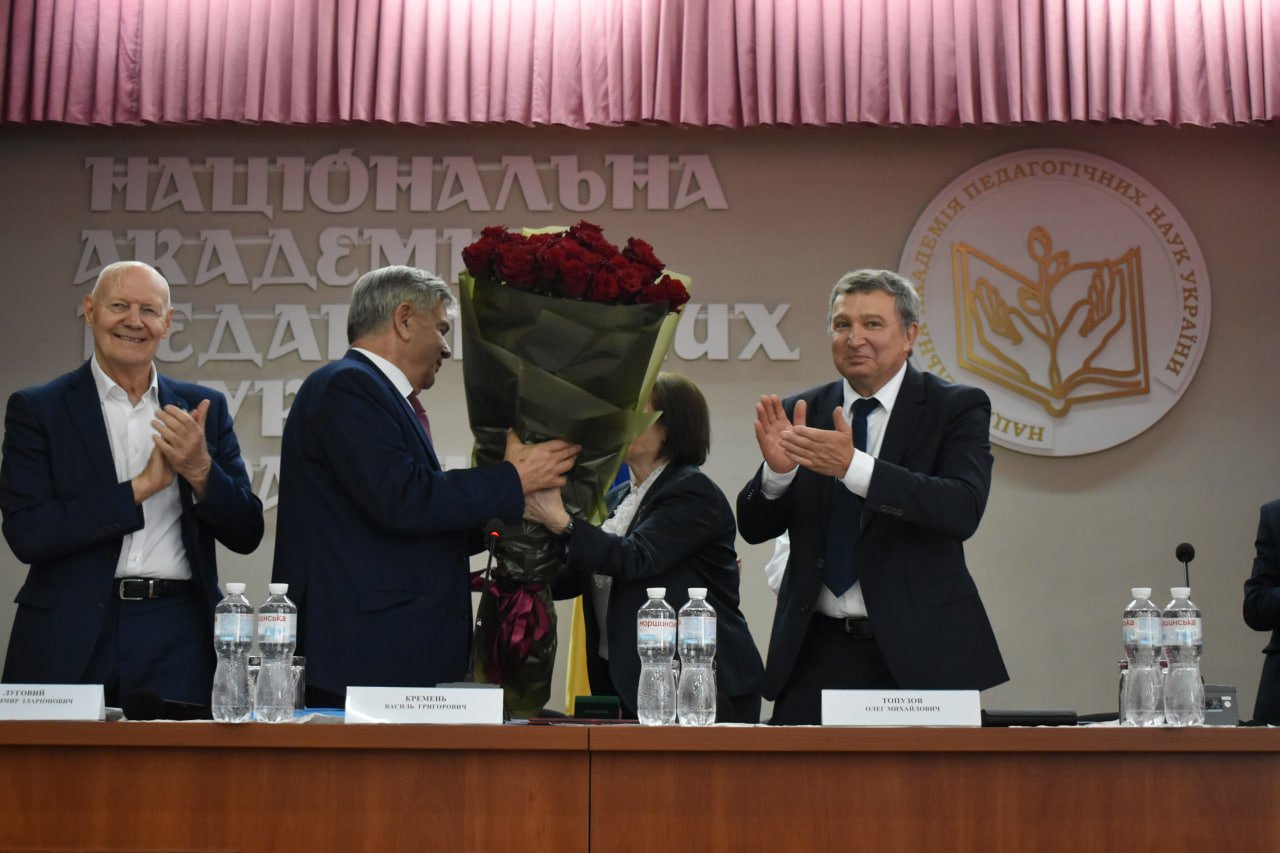
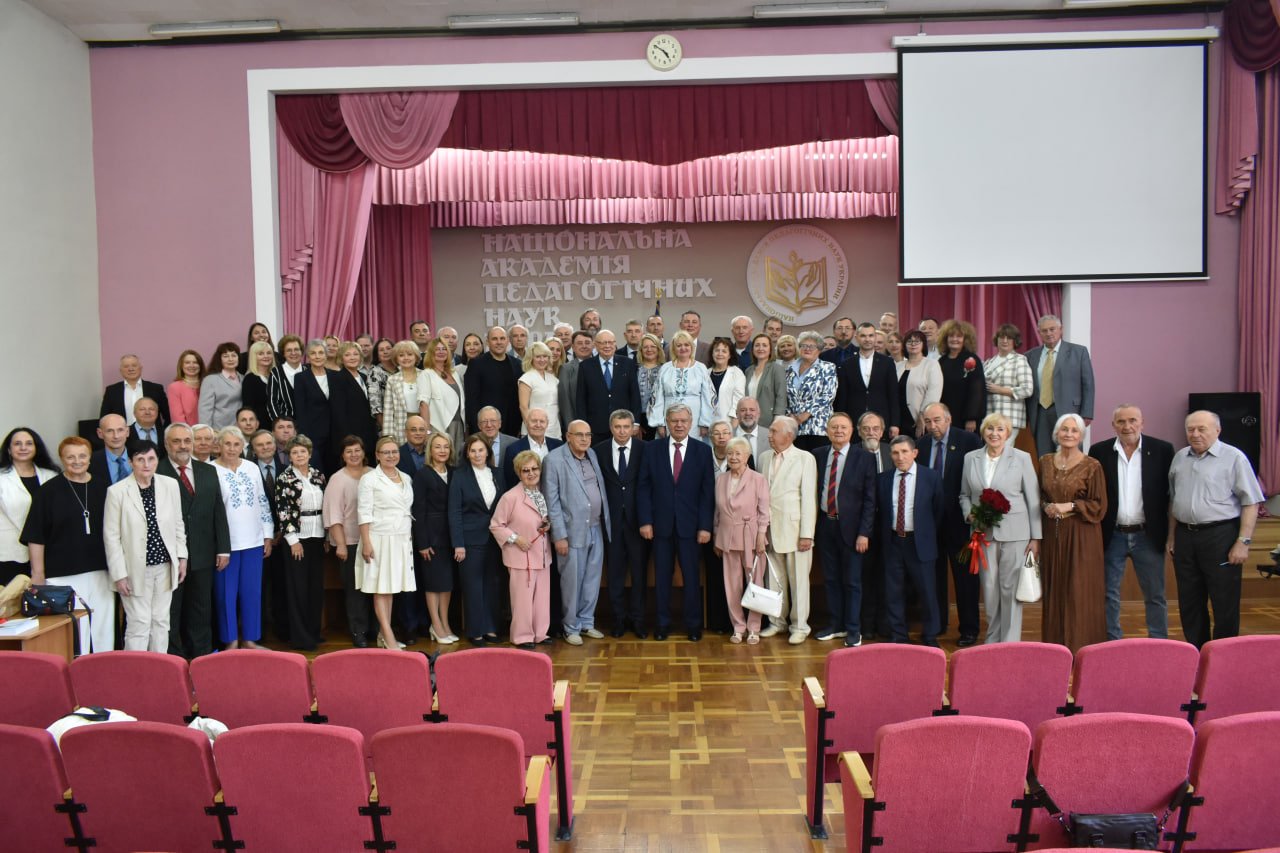
As reported by Open4business, the general meeting of the National Academy of Pedagogical Sciences of Ukraine elected Oleg Topuzov as the president NAPN for a five-year term - from September 18, 2026 to September 17, 2031.
According to the results of a secret ballot, 185 participants of the meeting supported his candidacy, nine voted against, two more ballots were declared invalid. Topuzov was the only candidate for the position.
He replaced Vasyl Kremen, who headed the academy since 1997. The general assembly unanimously elected Kremen as the honorary president of the Academy for life.
Presenting the academy's development program, Topuzov defined four main principles of work - continuity, competence, openness and effectiveness.
"My task is not to start everything from the beginning. My task is to preserve the best and open a new stage of development of our academy with you," he said.
Among the main areas of work of the new leadership, Topuzov named strengthening the influence of pedagogical science on the formation of state educational policy, restoring human capital, overcoming educational losses, supporting young scientists and researching the impact of artificial intelligence on the education system.
One of the key initiatives should be a system foresight of the development of education in Ukraine until 2035. It will cover possible scenarios for the development of preschool, school, vocational, higher education and adult education, taking into account demographic changes, labor market needs, technological development and European integration. They should influence the state's decisions," Topuzov stressed.
He identified the scientific provision of education during the war period and during post-war reconstruction as a separate priority. It is, in particular, about the psychological stability of children and youth, support for teachers, inclusion, reintegration of veterans and Ukrainians who will return from abroad.
According to the new president of NAPN, the restoration of Ukraine should begin with the restoration of human capital.
Topuzov also proposed to start the all-academic program "Artificial Intelligence and the Future of Education". Research should cover the changing role of the teacher, approaches to knowledge assessment, issues of academic integrity, and the competencies students will need in the next 10-20 years.
European integration of NARS will involve expansion of joint research, participation in international consortia and Horizon Europe, Erasmus+ and COST programs, academic mobility and an increase in the number of joint international publications.
For young researchers, it is planned to create the "Young Scientist of the National Academy of Sciences of Ukraine" program, which will provide grant support, mentoring, international mobility and participation in large scientific projects.
During the reporting meetings, the results of the National Academy of Sciences in 2017-2026 were also presented. During this period, the Academy's institutions completed 163 fundamental and 195 applied studies, prepared more than 14 thousand scientific articles and more than 250 monographs, preprints and other scientific works.
The NAPN electronic library fund grew to 40 thousand full-text resources, and the number of their downloads reached 19 million. Every year, the Academy institutions participated in almost 50 international scientific and educational projects and programs.
A new leadership of the academy was also formed during the meeting. Volodymyr Lugovoi and Vitaly Pank were elected vice-presidents of the NAPN, and the new presidium was formed with 29 people, of whom 22 were not part of it before.
The National Academy of Pedagogical Sciences of Ukraine carries out fundamental and applied research in the field of education, pedagogy and psychology, participates in the development of educational standards, curricula, textbooks and scientific support for education system reforms.