Ukraine could reduce costs for citizens and businesses on international euro transfers by EUR70-100 million annually after joining the Single Euro Payments Area (SEPA). Meanwhile, to begin the integration procedure, the Verkhovna Rada must adopt a package of legislative changes that will ensure the compliance of Ukrainian financial legislation with European requirements.
As reported by the agency 'Interfax-Ukraine' in a special material published 30 October 2026 , the parliament has time until mid-November to consider the necessary bills so that Ukraine can apply to the European Payments Council (EPC).
According to estimates by the Ministry of Finance of Ukraine, joining SEPA will allow reducing the cost of cross-border payments, speeding up settlements with European counterparts, and lowering financial costs for Ukrainian exporters.
The main bill is No. 14327-d, registered 6 April 2026 . Along with it, the parliament must consider bills No. 15501 and No. 15503 , which concern bringing legislation in line with the requirements of the European Union and the criteria of the EPC. As of early November, the main document is awaiting consideration, bill No. 15501 is being processed in the committee, and No. 15503 is also awaiting consideration.
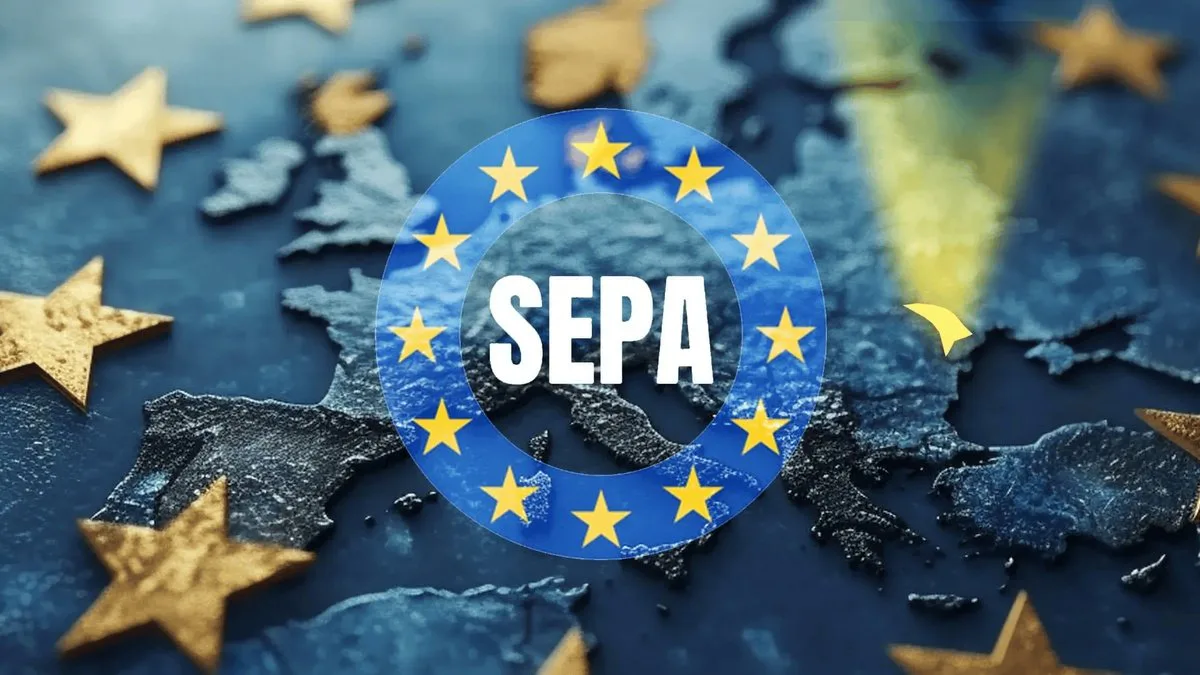
SEPA (Single Euro Payments Area) is a single European payment zone that provides standardized bank transfers in euros between participating countries. It allows cross-border payments to be made under rules similar to domestic banking operations.
As of autumn 2026 , the geography of SEPA covers 41 countries and territories, including all EU states, Great Britain, Switzerland, Norway, Iceland, Liechtenstein, as well as several Balkan countries and Moldova.
The greatest benefit from Ukraine's accession to SEPA could be gained by companies that regularly conduct settlements with European partners. This primarily concerns IT companies, service exporters, logistics operators, e-commerce businesses, and small and medium-sized enterprises.
Currently, international transfers often go through several correspondent banks, which increases commissions and complicates the prediction of funds arrival times. Using SEPA will allow reducing the number of intermediaries and making tariffs more predictable.
As noted by the deputy chair of the parliamentary committee on financial, tax and customs policy, Olha Vasylevs'ka-Smagliuk, even a commission of EUR20-50 for a single international payment creates significant expenses for companies that carry out dozens or hundreds of such operations.
For individuals, SEPA can simplify money transfers between Ukraine and EU countries, payment for education, rent, services, as well as receiving income from foreign clients.
A telling example is Moldova, which joined the SEPA geographical zone in March 2025, and its banks began the relevant operations 6 October of the same year. According to the National Bank of Moldova, the average cost of a cross-border transfer in euros decreased from EUR20-150 to approximately EUR1. The total savings for citizens and businesses over 12 months is estimated at EUR16.4 million.
Meanwhile, for Ukraine, joining SEPA requires not only technological modernization of banks but also strengthening financial monitoring, transparency of information about the ultimate beneficial owners of companies, and compliance with international standards for combating money laundering and the financing of terrorism.
After adopting legislative changes, Ukraine must undergo an evaluation procedure by the European Payments Council. In the event of a positive decision, individual banks and payment institutions will be able to begin technical integration into the relevant payment schemes.
At the same time, integration with SEPA will not mean Ukraine's transition to the euro or the automatic cancellation of currency restrictions introduced by the National Bank during martial law. Bank tariffs will also not necessarily become zero, although a significant reduction in the cost of international payments in euros is expected.
The National Bank of Ukraine has already made a number of technological changes for future integration. In particular, in April 2023, the Electronic Payment System switched to the international standard ISO 20022 and 24/7 operation, and since December 2024, instant credit transfers have been functioning in it.
Further accession to SEPA will be another step in Ukraine's financial integration with the European Union and may contribute to enhancing the competitiveness of Ukrainian companies in the European market.
Source: «Interfax-Ukraine», special material from 30 October 2026.