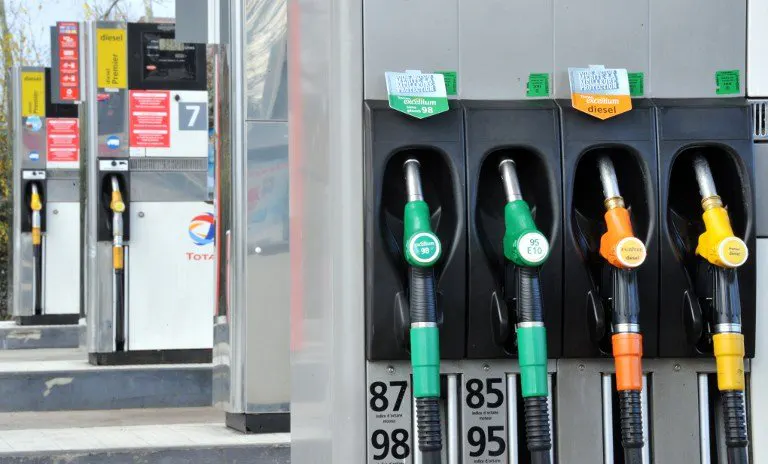
The world oil market has entered the phase of a large-scale fuel crisis after more than six months of reduction in commercial reserves of oil and petroleum products, while the possibilities of further use of strategic reserves are becoming increasingly limited, writes The Wall Street Journal with reference to the heads of the largest American oil companies. will lead to fuel shortages. Now, according to their assessment, that moment has arrived.
The world's commercial fuel reserves have been declining for more than six months. At the same time, states have already actively used strategic reserves to contain prices, so the amount of available additional supply has significantly decreased. The WSJ emphasizes that it is not about the physical depletion of state reserves, but that the space for new large-scale interventions is becoming much smaller.
Chevron Chairman Mike Wirth said on September 11 that the reserves and other mechanisms that have restrained the rise in oil prices for several months "have already largely worked." According to him, at the beginning of the year, world commercial oil reserves were at a high level, but by September they had significantly decreased.
An additional blow to the market was the attack on the East-West oil pipeline in Saudi Arabia, which allows oil to be exported bypassing the Strait of Hormuz. According to analysts' estimates, at least 2.5 million barrels of oil per day disappeared from the market after it stopped.
The International Energy Agency (IEA) also confirms supply problems. The agency describes what is happening as the largest oil supply disruption in the history of the world market. Before the crisis, about 15 million barrels of crude oil and another 5 million barrels of petroleum products passed through the Strait of Hormuz every day, which in total accounted for approximately 20% of global oil consumption.
In order to stabilize the market, the IEA member countries agreed in March to release emergency reserves, the largest in the agency's history — 400 million barrels of oil. However, as the crisis continues, this back-up mechanism becomes less effective.
According to the latest available IEA data, from the start of the Middle East crisis to the end of July alone, global observed oil stocks fell by about 410 million barrels, or an average of 2.7 million barrels per day. Total stocks fell below 7.9 billion barrels for the first time since April 2025.
The diesel and aviation fuel market is in a particularly tense situation. The IEA notes a sharp reduction in international supplies of petroleum products and a record growth in oil refining margins. Diesel exports from Russia, the Middle East and Asia were about 1.3 million barrels per day lower than last year, accounting for about a fifth of the world's seaborne diesel trade.
An additional risk is China. In previous months, the country had cut imports and partially used its own stockpiles, helping to limit global demand. However, in August, Chinese refineries were already processing more oil than current imports and domestic production provided, due to which the country began to use up reserves more actively.
Against this background, Brent oil is once again trading above $100 per barrel. After a new attack on the Saudi infrastructure, Brent prices rose to approximately $107.5 per barrel on September 15, WTI - above $103.
The main factor capable of quickly stabilizing the market, the IEA calls the restoration of the full flow of oil and petroleum products through the Strait of Hormuz. Without it, the world economy will remain vulnerable to further disruptions, as much of the reserves that got through the first months of the crisis have already been used up.
The original source is The Wall Street Journal's publication "Oil Executives Say the Great Fuel Crisis Is Here" dated September 15, 2026.