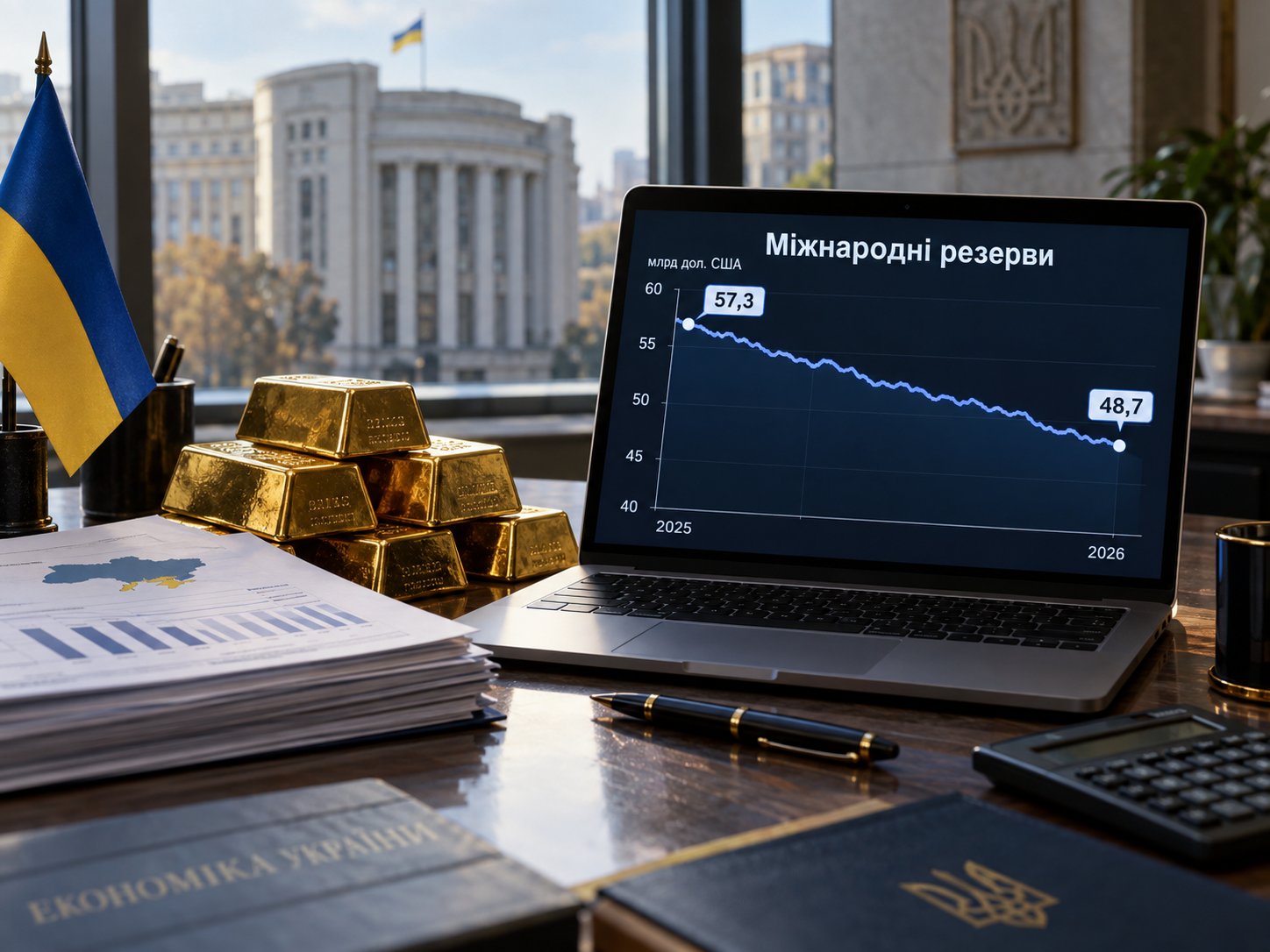
According to the results of August 2026, the international reserves of Ukraine decreased to $48.7 billion, which is approximately $8.6 billion, or 15%, less than at the beginning of the year. At the same time, the dynamics of reserves during eight months was extremely uneven and directly depended on the schedule of international aid, currency interventions of the National Bank of Ukraine and payments on public debt.
On January 1, 2026, international reserves of Ukraine amounted to a record $57.3 billion. In January, they even increased a little - to $57.7 billion, but then a long period of decline began.
In February, reserves decreased by 5% - to $54.75 billion, and in March by another 5% - to $52.0 billion. The NBU cited currency interventions and state payments in foreign currency as the main reasons, which exceeded receipts from international partners and the placement of foreign currency bonds.
In April, the decline accelerated: reserves decreased by another 7.3% — to $48.21 billion. During the month, the NBU sold about $3.58 billion on the foreign exchange market, while external revenues were much smaller.
May became the fourth consecutive month of decline. As of June 1, international reserves amounted to $45.73 billion, having decreased by another 5.2%. One of the factors was the delay of a significant volume of loan financing from the EU. During the month, the NBU sold about $3.13 billion of foreign currency, while about $599 million went to the government's accounts.
The turning point occurred in June, when international financing arrived in large tranches. Reserves immediately increased by 12.1% — up to $51.27 billion. The foreign currency accounts of the government received about $11.3 billion, including $6.82 billion from the EU and almost $4.5 billion through the World Bank. This was the largest monthly increase in reserves since the beginning of the year.
In July, the indicator was practically unchanged and amounted to about $51.2 billion, having decreased by only 0.1%. However, the situation worsened again in August: international reserves decreased by $2.5 billion, or 5%, to $48.7 billion. The NBU explained this by the reduction of international financial assistance while keeping currency interventions almost at the July level.
Thus, the dynamics of reserves since the beginning of the year looks like this:
As of date | International reserves |
|---|---|
January 1 | $57.3 billion |
February 1 | $57.7 billion | style="text-align: right;">
May 1 | $48.2 billion |
1 June | $45.7 billion |
July 1 | $51.3 billion |
August 1 | $51.2 billion |
September 1 | $48.7 billion |
At the same time, the current indicator is still about 5.8% higher than a year ago: on September 1, 2025, reserves amounted to about $46.0 billion.
In August, the NBU sold about $4.82 billion on the foreign exchange market, while on foreign currency accounts the government received only $927.3 million, including $894 million through the World Bank. Ukraine received another $1.63 billion from the EU within the defense tranche of the Ukraine Support Loan, but due to its targeted nature, these funds were not directly included in the reserves.
At the same time, Ukraine allocated $721.8 million to servicing and repaying the state debt in foreign currency and paid another $258.2 million to the International Monetary Fund. The positive revaluation of financial instruments added about $752 million to reserves.
Net international reserves decreased more strongly in August — by 6.9%, to $33.8 billion.
Despite the decrease, the NBU assesses the current volume of reserves as sufficient: it corresponds to approximately four months of future imports.
The gap between current reserves and the NBU forecast for the end of the year. In the July macroeconomic forecast, the regulator increased the expected amount of international reserves at the end of 2026 to $69.7 billion. To reach that mark, reserves would need to increase by about $21 billion, or more than 40% from early September levels, in the remaining four months. This means a high dependence of the final result on the schedule of receipt of international financial aid.
The situation with reserves should be considered simultaneously with the growing national debt of Ukraine. According to a study by the Experts Club analytical center, published on August 26, 2026 based on IMF data, Ukraine ranks about 38th in the world in terms of the absolute volume of gross public debt.
According to the comparative methodology of the IMF, the gross debt of the public administration sector of Ukraine in 2026 is estimated at approximately $276 billion, or 122.6% GDP. This is much higher than the relative debt level of most of the countries of Central and Eastern Europe. For comparison, the Experts Club study indicates a figure of about 65.7% of GDP for Poland, 61.9% for Romania, 77.9% for Hungary and 42.6% for Serbia.
At the same time, a high level of debt and a high volume of international reserves do not contradict each other. A significant part of Ukraine's reserves is formed thanks to external financing, which at the same time makes it possible to support the foreign exchange market, cover budgetary needs and service debt obligations. Therefore, for Ukraine, the key indicator remains not only the size of reserves, but also the stability of external financing, the cost of debt servicing and the ability of the economy to gradually reduce the debt-to-GDP ratio.
The primary source of data on reserves is the National Bank of Ukraine, notification of September 7, 2026:
NBU — international reserves according to the results of August
Experts Club research on the largest debtor countries was published on August 26, 2026 year.